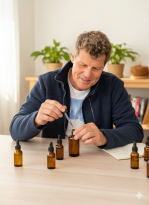
Content 50 ml
Recommended treatment
Free shipping on orders of more than £ 30.00
VAT included

Feeling blue? You're not alone! We all feel sad at times; it's a normal human emotion. Sometimes, it's clear to see what has triggered our depression. Common reasons for feeling sad include bereavement, the end of a relationship, losing your job or money problems. But it's not always so clearcut.
You might yourself waking up every morning feeling lethargic, with no energy for anything except lying on the couch and watch box sets. You might be feeling frustrated and sad that you haven't tackled any of those chores that are waiting for you. Maybe you're feeling isolated and lonely, or unsupported by your friends and family.
Sometimes you might compare yourself unfavourably to others who seem to have a perfect life, or you might be suffering from a range of vague aches and pains. You might be brooding on those kilos you've piled on recently or be worried about a mountain of unpaid bills. But what else causes those "meh" days when we feel sad - and what can we do to feel better?
Here are some reasons that might be causing you to feel dejected:
The grey skies and shorter hours of daylight in the winter can make us feel sad, and some people are more susceptible to this effect than others. During spring, people spend more time outside, and their moods improve. Researchers also found that our cognitive, problem solving and creative abilities improve in the spring and summer.
Some people are more deeply affected by the changing seasons. They may suffer from a condition known as Seasonally Affective Disorder or SAD, when the winter blues develop into clinical depression, with changes in sleep patterns, motivation and appetite. More women than men are affected by this disorder.
If you're suffering from the winter blues, try to spend some time outside every day, whenever the weather permits. Some people find that a daylight lamp can improve their mood, or try Bach flower mix 92, which helps to banish gloomy thoughts and lift the spirits.
Our stress responses evolved to cope with very different kinds of stressors than those we're required to deal with today. We rarely need to run away from ferocious beasts and then relax, but we have to cope with the chronic stresses of the modern world. Financial worries, work pressures, and lengthy commutes are worries that are difficult to escape and that we have little control over.
When we're facing multiple stresses without any recovery time, it can leave us feeling drained and discouraged, without any resilience to allow us to bounce back. If you feel that your stress levels are building up and your life is just a burden, meditation, yoga and regular exercise can help. Bach Flower Super Mix 5 also allows you to cope with stressful times, addressing issues such as insomnia, panic attacks and poor concentration. Sharing your feelings can also help - if you don't want to talk to a family member or friend, you might feel more able to open up to a counsellor or therapist.
Our hormones influence many of our bodily functions, including metabolism, growth, sexual function and mood. Low levels of certain hormones, for example, those secreted by the thyroid, are too low, can be the cause of depression. Hormones also fluctuate during the menstrual cycle, and a woman may experience a low mood and irritability in the week before her period.
Alternative treatments such as acupuncture can be useful in regulating hormones. Bach flower mix 60 can also help to lift your mood and restore your equilibrium.
Are you burdened with an inner critic who's always criticising and judging your every action? Especially when things aren't going well? This critical inner voice doubles down on anything negative by blaming you for what's happened. It undermines you and stops you from enjoying positive events by telling you that you don't deserve it or that it won't last.
These negative thoughts take the enjoyment out of life and are likely to make you feel sad and gloomy. When you're troubled by fears and worries, take a pen and paper and write them down - then screw the sheet of paper up and throw it away! Creating a document and then dragging it into the trash works equally well.
Many people in Northern Europe don't have sufficient vitamin D, and this is linked to a higher risk of depression. We get some vitamin D from foods such as egg yolks, oily fish and fortified breakfast cereals and the body also produces this essential substance from sunlight. The reasons for the insufficiency aren't proven, but scientists link it to lack of exposure to sunlight and poor nutrition.
Large scale studies in the Netherlands have shown that Vitamin D levels were 14% lower in people with moderate to severe depression compared to those not suffering from depressive disorders. So if you're feeling blue, you might want to consider taking a Vitamin D supplement of 10 micrograms per day.
It can often be challenging to establish the reasons why you're feeling blue. If you experience a low mood for more than two weeks, consider consulting a doctor to exclude any underlying medical factors.
Sources:
https://www.nhs.uk/conditions/stress-anxiety-depression/feel-better-and-happy/
https://www.health.harvard.edu/blog/seasonal-affective-disorder-bring-on-the-light-201212215663
https://www.ncbi.nlm.nih.gov/pmc/articles/PMC2908269/
Created by Tom Vermeersch (bio)

Tom Vermeersch is a certified Psychologist and Bach flower expert with more than 30 years of experience.

What makes it so hard to go back to work?
Millions of people furloughed for months are now being recalled to work. Others, who have been working from home throughout the lockdown, are returning to the office. And some jobs have simply disappeared: many people are facing redundancy and will soon have to cope with job hunting. Going back to work after an unprecedented length of time at home is quite a challenge.

Are you resilient enough? Take our quiz!
Do you have enough resilience to face the world out there? Take our quiz to find out how resilient you are and find tips on how to build your mental resilience.

Is the world as we know it over?
Since the outbreak of the COVID-19 pandemic, governments around the world have taken unprecedented measures to stop the spread of coronavirus. The rapid changes we've seen have had an impact on almost every aspect of our lives.

Hiding a depression: find out if someone you know - or you yourself! - is doing this
It's not always easy to tell if someone has depression. While some signs such as sadness, pessimism and withdrawal from social interaction are easy to recognise, other symptoms may be less obvious. And some people are very good at hiding their depression - even from themselves!

Isn't depression just a fancy word for feeling a bit down?
Mental health issues such as depression and anxiety affect around 1 in 6 people at some stage of their life. Despite it being such a common problem, many sufferers wait months or even years before seeking help.

Tips to balance your negative aspects
Everyone is unique, even in their own bad habits or negative traits. Here are some tips to balance those negative traits in our new article!

Letting go of the past: 5 tips
Lynn Anderson told it very nicely in her song “I beg your pardon; I never promised you a rose garden”. Life isn’t all roses and everybody experiences something they would rather not once in their life.

Can we learn from our mistakes and develop a stronger, healthier emotional bondwith our kids? To help you identify your weak spots, we’ve rounded up some of the most common mistakes parents make.

Why a life without stress and obstacles is unrewarding
Stress can be both good and bad; it’s up to you how you look at it. But too much stress can be dangerous. Read more about stress in this article!

Have you considered yoga? The advantages of practicing yoga
Have you considered yoga? There are many advantages to practicing yoga. It is a holistic practice benefitting you physically, emotionally & mentally.
Feeling blue? You're not alone! We all feel sad at times; it's a normal human emotion. Sometimes, it's clear to see what has triggered our depression. Common reasons for feeling sad include bereavement, the end of a relationship, losing your job or money problems. But it's not always so clearcut.
You might yourself waking up every morning feeling lethargic, with no energy for anything except lying on the couch and watch box sets. You might be feeling frustrated and sad that you haven't tackled any of those chores that are waiting for you. Maybe you're feeling isolated and lonely, or unsupported by your friends and family.
Sometimes you might compare yourself unfavourably to others who seem to have a perfect life, or you might be suffering from a range of vague aches and pains. You might be brooding on those kilos you've piled on recently or be worried about a mountain of unpaid bills. But what else causes those "meh" days when we feel sad - and what can we do to feel better?

Here are some reasons that might be causing you to feel dejected:
The grey skies and shorter hours of daylight in the winter can make us feel sad, and some people are more susceptible to this effect than others. During spring, people spend more time outside, and their moods improve. Researchers also found that our cognitive, problem solving and creative abilities improve in the spring and summer.
Some people are more deeply affected by the changing seasons. They may suffer from a condition known as Seasonally Affective Disorder or SAD, when the winter blues develop into clinical depression, with changes in sleep patterns, motivation and appetite. More women than men are affected by this disorder.
If you're suffering from the winter blues, try to spend some time outside every day, whenever the weather permits. Some people find that a daylight lamp can improve their mood, or try Bach flower mix 92, which helps to banish gloomy thoughts and lift the spirits.
Our stress responses evolved to cope with very different kinds of stressors than those we're required to deal with today. We rarely need to run away from ferocious beasts and then relax, but we have to cope with the chronic stresses of the modern world. Financial worries, work pressures, and lengthy commutes are worries that are difficult to escape and that we have little control over.
When we're facing multiple stresses without any recovery time, it can leave us feeling drained and discouraged, without any resilience to allow us to bounce back. If you feel that your stress levels are building up and your life is just a burden, meditation, yoga and regular exercise can help. Bach Flower Super Mix 5 also allows you to cope with stressful times, addressing issues such as insomnia, panic attacks and poor concentration. Sharing your feelings can also help - if you don't want to talk to a family member or friend, you might feel more able to open up to a counsellor or therapist.
Our hormones influence many of our bodily functions, including metabolism, growth, sexual function and mood. Low levels of certain hormones, for example, those secreted by the thyroid, are too low, can be the cause of depression. Hormones also fluctuate during the menstrual cycle, and a woman may experience a low mood and irritability in the week before her period.
Alternative treatments such as acupuncture can be useful in regulating hormones. Bach flower mix 60 can also help to lift your mood and restore your equilibrium.
Are you burdened with an inner critic who's always criticising and judging your every action? Especially when things aren't going well? This critical inner voice doubles down on anything negative by blaming you for what's happened. It undermines you and stops you from enjoying positive events by telling you that you don't deserve it or that it won't last.
These negative thoughts take the enjoyment out of life and are likely to make you feel sad and gloomy. When you're troubled by fears and worries, take a pen and paper and write them down - then screw the sheet of paper up and throw it away! Creating a document and then dragging it into the trash works equally well.
Many people in Northern Europe don't have sufficient vitamin D, and this is linked to a higher risk of depression. We get some vitamin D from foods such as egg yolks, oily fish and fortified breakfast cereals and the body also produces this essential substance from sunlight. The reasons for the insufficiency aren't proven, but scientists link it to lack of exposure to sunlight and poor nutrition.
Large scale studies in the Netherlands have shown that Vitamin D levels were 14% lower in people with moderate to severe depression compared to those not suffering from depressive disorders. So if you're feeling blue, you might want to consider taking a Vitamin D supplement of 10 micrograms per day.
It can often be challenging to establish the reasons why you're feeling blue. If you experience a low mood for more than two weeks, consider consulting a doctor to exclude any underlying medical factors.
Sources:
https://www.nhs.uk/conditions/stress-anxiety-depression/feel-better-and-happy/
https://www.health.harvard.edu/blog/seasonal-affective-disorder-bring-on-the-light-201212215663
https://www.ncbi.nlm.nih.gov/pmc/articles/PMC2908269/
Millions of people furloughed for months are now being recalled to work. Others, who have been working from home throughout the lockdown, are returning to the office. And some jobs have simply disappeared: many people are facing redundancy and will soon have to cope with job hunting. Going back to work after an unprecedented length of time at home is quite a challenge.
Do you have enough resilience to face the world out there? Take our quiz to find out how resilient you are and find tips on how to build your mental resilience.
Since the outbreak of the COVID-19 pandemic, governments around the world have taken unprecedented measures to stop the spread of coronavirus. The rapid changes we've seen have had an impact on almost every aspect of our lives.
It's not always easy to tell if someone has depression. While some signs such as sadness, pessimism and withdrawal from social interaction are easy to recognise, other symptoms may be less obvious. And some people are very good at hiding their depression - even from themselves!
Mental health issues such as depression and anxiety affect around 1 in 6 people at some stage of their life. Despite it being such a common problem, many sufferers wait months or even years before seeking help.
Everyone is unique, even in their own bad habits or negative traits. Here are some tips to balance those negative traits in our new article!
Lynn Anderson told it very nicely in her song “I beg your pardon; I never promised you a rose garden”. Life isn’t all roses and everybody experiences something they would rather not once in their life.
Read the complete article
Can we learn from our mistakes and develop a stronger, healthier emotional bondwith our kids? To help you identify your weak spots, we’ve rounded up some of the most common mistakes parents make.
Stress can be both good and bad; it’s up to you how you look at it. But too much stress can be dangerous. Read more about stress in this article!
Read the complete article
Have you considered yoga? There are many advantages to practicing yoga. It is a holistic practice benefitting you physically, emotionally & mentally.
Bach Flowers are not medicinal but harmless plant extracts which are used to support health.
© 2026 Mariepure - Webdesign Publi4u


Are you unsure which Bach flowers can help you? Contact Tom for free advice.